Tag: writing

  • What Do We Inherit Beyond Our Names

    When doing my podcast Longtime Ago People, I often find that family history lives in the narrow spaces between memory and place, and this conversation with Ian is exactly that. I’m tracing a life carried between Sussex and South Africa, beginning with our two grandmothers who were sisters and a child born far from England by the quirk of a passport. The thread starts in Windhoek, runs through Cape Town and East London, and eventually loops back to Steyning in the coronation year.

    A father’s diagnosis forces a young family across oceans, and his loss reshapes everything — money gone, home gone, and a mother suddenly having to learn to work again. The tone isn’t sentimental; it’s exact. Night school for shorthand, a first secretarial job in Portslade, and the quiet shock of moving from servants to scarcity. The theme running through it all is resilience anchored by kin.

    What lifts the story beyond grief is Granddad Jim, a Sussex original whose life reads like a ledger of rural enterprise. He auctioneered cattle and furniture, bought a pub, wrapped horses’ hooves in cloth to smuggle French brandy over the Downs, and kept the family table full through fishing, shooting, and rows of vegetables by the cricket ground. He rented out his bathroom on Friday nights when neighbours still bathed in tin tubs, posted auction bills from a black trade bike, and told stories with two small boys tucked under his arms. These scenes ground the episode’s themes of family resilience, intergenerational memory, and rural English life. They’re practical lessons, too — how work ethic is modelled, how food systems looked before supermarkets, and how care often arrives as time and skill, not cash.

    South Africa stays vivid in Ian’s memory: manikin cigars flying from a carnival float, smoke from a grassfire racing uphill, a beach lagoon walled off from sharks. Decades later, he and his brother return just before COVID shuts the world down. Cape Town shines with its wind-and-mountain logic — property value by elevation and shelter — while East London feels uneasy, its parallel roads lined with idle youth and homes wired against crime. The Garden Route unspools like Australia: long distances of scrub and stone between townships. The journey becomes a reckoning with belonging and safety, a study in what endures and what declines, and a reflection on migration, identity, and diaspora memory.

    The professional arc arrives almost by accident. Piloting, once a dream, loses its glamour when a family member’s blunt briefing: minutes of thrill bookending hours of vigilance. Then a sixth‑form gap puts a teenager at the front of a classroom, just after the moon landings and their Hasselblad photographs made discovery feel possible. Teaching fits. It offers meaning and movement without leaving home entirely. This shift speaks to career pivots, vocational calling, and the way chance responsibilities can reveal an aptitude we didn’t know we had. Alongside, there’s mechanical comedy: a hand‑painted blue Riley that stains every fingertip and a lumbering Commer camper that rolls backwards down Welsh hills.

    Threaded through it all is the social history of a Sussex village becoming a commuter town, yet somehow keeping its charm. Names recur like waypoints: Jarvis Lane, the River Adur, Worthing, Chichester, Portslade. A red Sunbeam glows on a garage forecourt; a grandparent’s quiet loan steadies younger parents at a hard moment. The values are precise: loyalty within extended families, the dignity of manual skill, and the unashamed use of shared assets when times turn.

    In the end, the episode argues — without ever needing to say it outright — that identity is built from food gathered and cooked, from stories retold, and from choices made under pressure. Loss can’t be undone, but love can be practised like a craft, one task at a time.

  • Wiggy, Egg Sandwiches, Shared Baths & Cheeky Wiring  

    Family stories often arrive as small details—a nickname, a habit, a smell from a kitchen on a Sunday. Wiggy begins there. She earned her name from a halo of dark hair that never seemed to grey, a Londoner who found herself transplanted to Oxfordshire after a whirlwind start to adult life. Pregnant at sixteen, married to Ron against his family’s wishes, she navigated a world shaped by war and class expectations. The move cost Ron his inheritance; he traded land and status for love, and a bungalow he rushed to build before leaving for Africa with the army. Their son grew without his father for six years—war remapping their family like an abrupt line through a photograph. These pieces matter because they show how a single decision can change a lineage.

    Wiggy’s personality lives in contrasts: tender hospitality and sharp-tongued resentment, warmth for guests and cold memory for a husband she never forgave. Sundays meant tea, egg sandwiches sliced neat, and a house inexplicably cosy. Only later did the family learn why: Ron had wired their electricity to the neighbours on both sides—a roguish hack that kept fan heaters roaring without a bill to match. The scene is almost comic—comfort powered by a quiet transgression—but it frames a marriage where affection was rationed. Wiggy swore about Ron in private, then praised him on the day he died, as though grief rearranged her anger into something gentler. The emotions are messy, human, and familiar to anyone who has watched pride and pain coexist at a kitchen table.

    The wider clan deepens the portrait. On the other branch stands Doris, another Londoner, who fled Oxfordshire every weekend to dance in the city, leaving her daughter to manage the boys and the home. Both grans were pulled by London like a tide—one dragged away and stranded, one who always found the last bus back. Between their stories sit small rituals: shared baths among siblings and a younger uncle, cheap socials at the Smith’s Industries club, Christmas trees dressed on tight budgets. These are not grand adventures; they are the unvarnished rhythms of working families who made do, made jokes, and made memories strong enough to outlast the thin wallpaper of a rented hall.

    Time moves, and technology follows. The conversation turns to whether grandparents could bear the pace of today: iPads glowing on armchairs, FaceTime bridging 6,000 miles to South Africa, swipes too light or too hard for hands trained on spanners, not screens. Teaching an older parent to tap instead of press is a lesson in empathy as much as technique. For those who rode each iOS update year by year, shifts felt incremental. For a generation that skipped straight from rotary dials to video calls, the change can feel like a cliff. The wonder of seeing a son’s face across oceans wrestles with the frustration of missed rings and stubborn icons.

    One figure stands almost mythic: Uncle Mick, who left for South Africa at twenty-four and climbed fast—pools, company cars, and maids—a dream tinted by its era and later tempered by reality. Divorces thinned his luck; economics and age make the journey home too far now. Yet his arc shaped his nephew more than the engineers and grandparents did. It offered a map of ambition and change, a reminder that leaving is not always escape, and success is never a straight line. His life traces the cost of distance: material comfort balanced against an ache for home.

    What remains is grief, love, and the first hard lesson of loss. Many people meet death first through a grandparent; the shock is softer than a parent’s death but still seismic, opening a before and an after. Wiggy’s absence lingers in warm houses and salty egg sandwiches, in the punchline of stolen electricity and the punch of a word she used too freely for a quiet lounge. Family memory endures not because it is perfect but because it is precise. A nickname. A bus to London. A bath overfull. These details are the hooks we hang ourselves on—proof that ordinary lives carry the weight of history and the light of humour at the same time.

  • Family bonds are complex threads that weave through our lives, often becoming most visible in their absence.

    In this deeply moving episode, I sit down with Andy to reflect on the life and legacy of his younger brother Simon, who passed away unexpectedly from a heart aneurysm nearly a decade ago. What unfolds is a conversation full of raw vulnerability and genuine reflection, revealing the profound impact one seemingly ordinary life can have on countless others.

    We begin with Andy’s earliest memory of Simon’s birth at home in Leeds, where he was just five years old, witnessing this new addition to the family. What follows is a warm recollection of growing up in 1960s Yorkshirefamily holidaysto Filey and Scarboroughfish and chipscaravan parks—those quintessential British childhood experiences that helped shape their bond. Though separated by a five-and-a-half-year age gap, their relationship deepened over time.

    A recurring theme is the educational legacy running through their family. Their father was head of science at a comprehensive school in Pudsey, their uncle Stan a headteacher, and Simon himself became a beloved PE teacher. As Andy put it, “there’s a lot of teaching backgrounds in the family.” Simon’s gift for connecting with young people wasn’t fully appreciated until after his passing, when the sheer number of lives he’d touched became heartbreakingly clear.

    The funeral was a moment of reckoning. The service was so packed that people were “up in the rafters.” Andy told me, “He obviously touched a lot of people very, very closely.” It was a powerful reminder that those who speak softly often leave the loudest legacy.

    Simon was the calming influence, the emotional compass of the family—someone with “no isms or ists,” who could see things from other people’s hilltops. Andy believes that some of the family rifts that have emerged since Simon’s death might have been resolved had he still been here to mediate.

    When I asked Andy what he’d say if he could have one more conversation with Simon, his answer was heartbreakingly simple: “I would ask him to help me.” Even now, he feels the absence of Simon’s wisdom, rating himself “two out of ten compared to Simon’s ten out of ten” when it comes to resolving conflict.

    This conversation left me reflecting on the quiet power of everyday kindness, and the enduring legacy of those who hold families together—not with noise, but with grace.

  • The Power of Enduring Friendship: Reconnecting After 40 Years

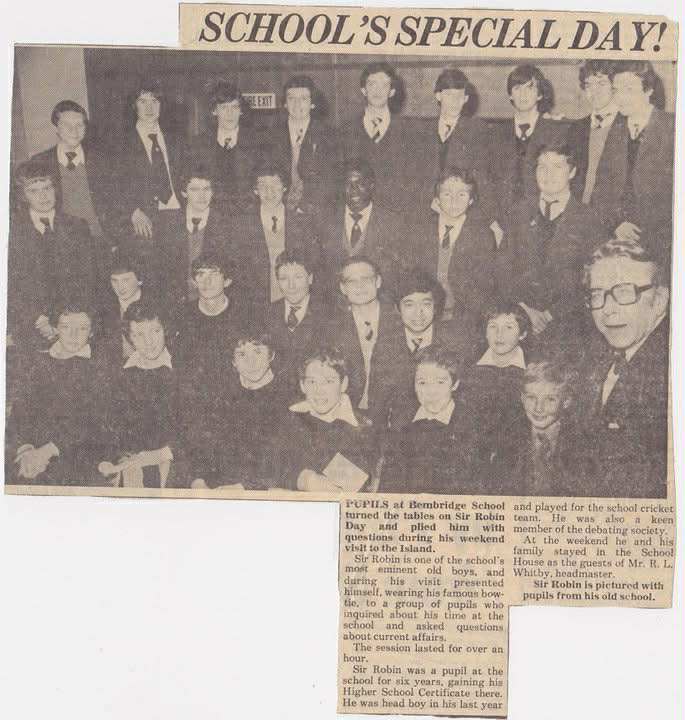
    There’s something quietly magical about reconnecting with an old friend and realising that, despite the decades that have passed, the connection remains as strong as ever. That’s exactly what I experienced when I reunited with Bas, my old schoolmate from Bembridge School on the Isle of Wight, after more than forty years apart.

    Our conversation swept us back to our school days in the late 1970s and early 1980s, offering a vivid glimpse into British boarding school life that felt uncannily reminiscent of Hogwarts—long before Rowling imagined hers. The distinctive house ties, the train and boat journey to reach the school perched dramatically on a cliff edge—the parallels were striking.

    What stood out most was how formative those years were. Bas reflected on how the experience fostered independence: “You have to sort of think on your own.” I agreed—it taught me self-reliance and emotional control, helping me understand that I could shape my own life.

    The physical environment loomed large in our memories: immaculate groundscreaking floorboards in Old House, and freezing dormitories where ice formed inside the windows. These shared hardships forged deep bonds, creating a sense of belonging that transcends time and geography.

    We laughed about the elaborate nickname culture—almost no one went by their real name. It was a kind of private language, reinforcing our place in a unique world.

    Music was another lifeline. From ABBA (Bas’s favourite) to The JamQueen, and Ultravox, these bands became the soundtrack to our adolescence. “It got me through,” Bas said—and I knew exactly what he meant.

    We reminisced about traditions like the Island Walk—a 30-mile overnight trek—and swapped ghost stories that once kept us awake. Though Bas now lives in Australia (with a “slight twang,” as I teased), our friendship felt untouched by time.

    This reunion reminded me that some friendships don’t fade—they simply wait to be rekindled. And when they are, it’s like coming home.