Tag: love

  • Wiggy, Egg Sandwiches, Shared Baths & Cheeky Wiring  

    Family stories often arrive as small details—a nickname, a habit, a smell from a kitchen on a Sunday. Wiggy begins there. She earned her name from a halo of dark hair that never seemed to grey, a Londoner who found herself transplanted to Oxfordshire after a whirlwind start to adult life. Pregnant at sixteen, married to Ron against his family’s wishes, she navigated a world shaped by war and class expectations. The move cost Ron his inheritance; he traded land and status for love, and a bungalow he rushed to build before leaving for Africa with the army. Their son grew without his father for six years—war remapping their family like an abrupt line through a photograph. These pieces matter because they show how a single decision can change a lineage.

    Wiggy’s personality lives in contrasts: tender hospitality and sharp-tongued resentment, warmth for guests and cold memory for a husband she never forgave. Sundays meant tea, egg sandwiches sliced neat, and a house inexplicably cosy. Only later did the family learn why: Ron had wired their electricity to the neighbours on both sides—a roguish hack that kept fan heaters roaring without a bill to match. The scene is almost comic—comfort powered by a quiet transgression—but it frames a marriage where affection was rationed. Wiggy swore about Ron in private, then praised him on the day he died, as though grief rearranged her anger into something gentler. The emotions are messy, human, and familiar to anyone who has watched pride and pain coexist at a kitchen table.

    The wider clan deepens the portrait. On the other branch stands Doris, another Londoner, who fled Oxfordshire every weekend to dance in the city, leaving her daughter to manage the boys and the home. Both grans were pulled by London like a tide—one dragged away and stranded, one who always found the last bus back. Between their stories sit small rituals: shared baths among siblings and a younger uncle, cheap socials at the Smith’s Industries club, Christmas trees dressed on tight budgets. These are not grand adventures; they are the unvarnished rhythms of working families who made do, made jokes, and made memories strong enough to outlast the thin wallpaper of a rented hall.

    Time moves, and technology follows. The conversation turns to whether grandparents could bear the pace of today: iPads glowing on armchairs, FaceTime bridging 6,000 miles to South Africa, swipes too light or too hard for hands trained on spanners, not screens. Teaching an older parent to tap instead of press is a lesson in empathy as much as technique. For those who rode each iOS update year by year, shifts felt incremental. For a generation that skipped straight from rotary dials to video calls, the change can feel like a cliff. The wonder of seeing a son’s face across oceans wrestles with the frustration of missed rings and stubborn icons.

    One figure stands almost mythic: Uncle Mick, who left for South Africa at twenty-four and climbed fast—pools, company cars, and maids—a dream tinted by its era and later tempered by reality. Divorces thinned his luck; economics and age make the journey home too far now. Yet his arc shaped his nephew more than the engineers and grandparents did. It offered a map of ambition and change, a reminder that leaving is not always escape, and success is never a straight line. His life traces the cost of distance: material comfort balanced against an ache for home.

    What remains is grief, love, and the first hard lesson of loss. Many people meet death first through a grandparent; the shock is softer than a parent’s death but still seismic, opening a before and an after. Wiggy’s absence lingers in warm houses and salty egg sandwiches, in the punchline of stolen electricity and the punch of a word she used too freely for a quiet lounge. Family memory endures not because it is perfect but because it is precise. A nickname. A bus to London. A bath overfull. These details are the hooks we hang ourselves on—proof that ordinary lives carry the weight of history and the light of humour at the same time.

  • The Power of Enduring Friendship: Reconnecting After 40 Years

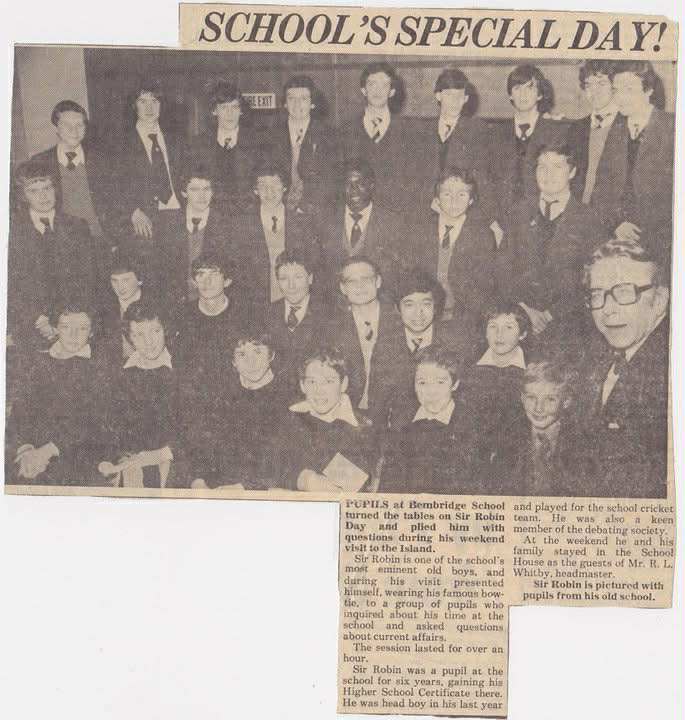
    There’s something quietly magical about reconnecting with an old friend and realising that, despite the decades that have passed, the connection remains as strong as ever. That’s exactly what I experienced when I reunited with Bas, my old schoolmate from Bembridge School on the Isle of Wight, after more than forty years apart.

    Our conversation swept us back to our school days in the late 1970s and early 1980s, offering a vivid glimpse into British boarding school life that felt uncannily reminiscent of Hogwarts—long before Rowling imagined hers. The distinctive house ties, the train and boat journey to reach the school perched dramatically on a cliff edge—the parallels were striking.

    What stood out most was how formative those years were. Bas reflected on how the experience fostered independence: “You have to sort of think on your own.” I agreed—it taught me self-reliance and emotional control, helping me understand that I could shape my own life.

    The physical environment loomed large in our memories: immaculate groundscreaking floorboards in Old House, and freezing dormitories where ice formed inside the windows. These shared hardships forged deep bonds, creating a sense of belonging that transcends time and geography.

    We laughed about the elaborate nickname culture—almost no one went by their real name. It was a kind of private language, reinforcing our place in a unique world.

    Music was another lifeline. From ABBA (Bas’s favourite) to The JamQueen, and Ultravox, these bands became the soundtrack to our adolescence. “It got me through,” Bas said—and I knew exactly what he meant.

    We reminisced about traditions like the Island Walk—a 30-mile overnight trek—and swapped ghost stories that once kept us awake. Though Bas now lives in Australia (with a “slight twang,” as I teased), our friendship felt untouched by time.

    This reunion reminded me that some friendships don’t fade—they simply wait to be rekindled. And when they are, it’s like coming home.

  • Dreams Made Real in Spain

    The bonds between parents and children often reveal themselves in the most unexpected ways, sometimes only becoming clear years after they’ve passed on. During a recent conversation I recorded with my brother-in-law, John, on the Mediterranean coast of Spain, a quietly profound revelation emerged: sometimes we find ourselves living the dreams our parents once had, without even realising it.

    The story centred around a son who discovered that his life by the coast quite likely fulfilled his late father’s deepest wish—to live by the sea. “I just found out the day before yesterday from my sister that I’m probably living his dream,” he told me, visibly moved. This realisation wove an emotional thread through the episode, connecting generations in a way neither could have predicted. Even when his father lived inland, he found solace in the hum of the M25 motorway, which “sounds like the sea”—a poetic detail that speaks to the persistence of our deepest yearnings.

    Music came through as another powerful bond between father and son. From Johnny Cash and Elvis Presley spinning on the family record player, to him introducing his dad to bands like Madness in the ’80s, it became a shared language. His current love for alternative country music traces back to the country melodies his father played. That focus on lyrics and musical meaning shaped his own approach to music—a musical inheritance that outlives absence.

    Above all, what struck me was the portrait of a remarkably inventive man. From hand-sewn wetsuits to early tennis ball machines and eco-friendly burning blocks, he embraced life with boundless curiosity and ingenuity. His workshop turned out satin lampshades and imaginative contraptions, though never patented—they were gifts of the moment. Through these stories, the adventurous spirit of a man who loved golf, and motorcycles came vividly to life.

    When we considered how he might respond to modern technologymobile phonesAI, and digital photography—John believed he’d embrace it all, grounded by his DIY spirit and authentic taste. That reflection ushered in a poignant truth: “When people are no longer there, everything they ever thought or believed just disappears.” And yet, these conversations hold something precious—they preserve more than memory. They capture the essence of someone who shaped not just one life, but maybe a geographical legacy.

  • Friendship Through the Decades: A Journey with Brenda and Chrissie

    In a world of fleeting connections,  Brenda and Chrissie friendship stands as a testament to genuine human bonds that transcend time. It all began in 1967 at Queen Charlotte’s Hospital in London, where they worked as midwives. Over five decades, their relationship has flourished, creating a tapestry of shared experiences, adventures, and memories that define true friendship.

    Their connection was built during their midwifery training, living in hospital accommodation at 348 Gold Oak Road. This period was characterised by a unique camaraderie, as healthcare professionals shared the intensity of midwifery work. They recall with fondness their cleaning lady, Mrs Sanchez, who somehow always knew which undergarments belonged to whom—a small, amusing detail that highlights the close-knit, family-like atmosphere of their early days together.

    Their adventures truly began with Chrissie’s grey Austin A40 van, which gave them mobility in an era when car ownership wasn’t common among young women. One memorable misadventure occurred when they ventured to Leicester Square to see Guess Who’s Coming to DinnerParking on newly established yellow lines (which they thought “didn’t mean anything after 6 o’clock”) resulted in them returning to find the van towed away to Elephant and Castle car pound. Told with laughter decades later, the story captures their youthful spirit and the different world of 1960s London.

    Their friendship evolved from local escapades to more ambitious travels. Their first major journey abroad in the mid-1970s took them to France’s Loire Valley, following hand-drawn directions on the back of an envelope. This trip marked the beginning of their European adventures, later expanding to organised tours of Italy, Egypt, and beyond. Sailing down the Nile, where looking across the fields felt like “being in the days of the Bible,” remains one of their most vivid travel memories.

    What makes their friendship truly special is how it weathered life’s changes. As Brenda progressed in her career, moving from midwife to director of nursing, their relationship adapted. They weren’t constantly in each other’s lives—Brenda reflects that “not living on top of each other” was key to their lasting friendship. Instead, they created space for each other during significant moments and holidays, establishing traditions like their annual Christmas gatherings.

    Their stories are peppered with historical touchpoints, placing their friendship within the changing Britain of the last six decades. From witnessing the Beatles era to delivering John Lennon and Yoko Ono’s baby, from navigating London before widespread motorways to adapting to modern travel, their friendship spans remarkable societal transformations. Yet the essence of their connection remained constant, providing stability amid change.

    Perhaps the most touching aspect of their relationship is their mutual support—during major life events and everyday moments alike. From saving Christmas gifts for each other during financially difficult times to finding creative solutions for holiday funding (like discovering £600 hidden in various spots around Chrissie’s parents’ house), they consistently showed up for one another with kindness and thoughtfulness.

    In today’s world of digital connections and transient relationshipsBrenda and Chrissie’s friendship offers valuable lessons in longevity, adaptation, and genuine human connection. Their story reminds me that the most meaningful relationships aren’t necessarily those with constant contact, but those that provide reliable support, shared joy, and deep understanding across decades of life’s unpredictable journey.