Author: longtimeagopeople

  • Wiggy, Egg Sandwiches, Shared Baths & Cheeky Wiring  

    Family stories often arrive as small details—a nickname, a habit, a smell from a kitchen on a Sunday. Wiggy begins there. She earned her name from a halo of dark hair that never seemed to grey, a Londoner who found herself transplanted to Oxfordshire after a whirlwind start to adult life. Pregnant at sixteen, married to Ron against his family’s wishes, she navigated a world shaped by war and class expectations. The move cost Ron his inheritance; he traded land and status for love, and a bungalow he rushed to build before leaving for Africa with the army. Their son grew without his father for six years—war remapping their family like an abrupt line through a photograph. These pieces matter because they show how a single decision can change a lineage.

    Wiggy’s personality lives in contrasts: tender hospitality and sharp-tongued resentment, warmth for guests and cold memory for a husband she never forgave. Sundays meant tea, egg sandwiches sliced neat, and a house inexplicably cosy. Only later did the family learn why: Ron had wired their electricity to the neighbours on both sides—a roguish hack that kept fan heaters roaring without a bill to match. The scene is almost comic—comfort powered by a quiet transgression—but it frames a marriage where affection was rationed. Wiggy swore about Ron in private, then praised him on the day he died, as though grief rearranged her anger into something gentler. The emotions are messy, human, and familiar to anyone who has watched pride and pain coexist at a kitchen table.

    The wider clan deepens the portrait. On the other branch stands Doris, another Londoner, who fled Oxfordshire every weekend to dance in the city, leaving her daughter to manage the boys and the home. Both grans were pulled by London like a tide—one dragged away and stranded, one who always found the last bus back. Between their stories sit small rituals: shared baths among siblings and a younger uncle, cheap socials at the Smith’s Industries club, Christmas trees dressed on tight budgets. These are not grand adventures; they are the unvarnished rhythms of working families who made do, made jokes, and made memories strong enough to outlast the thin wallpaper of a rented hall.

    Time moves, and technology follows. The conversation turns to whether grandparents could bear the pace of today: iPads glowing on armchairs, FaceTime bridging 6,000 miles to South Africa, swipes too light or too hard for hands trained on spanners, not screens. Teaching an older parent to tap instead of press is a lesson in empathy as much as technique. For those who rode each iOS update year by year, shifts felt incremental. For a generation that skipped straight from rotary dials to video calls, the change can feel like a cliff. The wonder of seeing a son’s face across oceans wrestles with the frustration of missed rings and stubborn icons.

    One figure stands almost mythic: Uncle Mick, who left for South Africa at twenty-four and climbed fast—pools, company cars, and maids—a dream tinted by its era and later tempered by reality. Divorces thinned his luck; economics and age make the journey home too far now. Yet his arc shaped his nephew more than the engineers and grandparents did. It offered a map of ambition and change, a reminder that leaving is not always escape, and success is never a straight line. His life traces the cost of distance: material comfort balanced against an ache for home.

    What remains is grief, love, and the first hard lesson of loss. Many people meet death first through a grandparent; the shock is softer than a parent’s death but still seismic, opening a before and an after. Wiggy’s absence lingers in warm houses and salty egg sandwiches, in the punchline of stolen electricity and the punch of a word she used too freely for a quiet lounge. Family memory endures not because it is perfect but because it is precise. A nickname. A bus to London. A bath overfull. These details are the hooks we hang ourselves on—proof that ordinary lives carry the weight of history and the light of humour at the same time.
  • From a £99 Suit to the NYSE Bell 

    The story begins with a commute and a choice. Picture Napa Valley mornings at four, a 62-mile drive to San Francisco, and a life built around the reward of quiet weekends among vines. That rhythm frames a deeper arc—one about risk, mentorship, and the compounding value of saying yes before you feel ready.

    David’s journey goes back to 1985 London, when a teenager without university plans hunted for a way into finance and took a super-junior role in a petroleum department he barely understood. One BBC documentary later, he passed the interview, told a white lie about computers, and stepped into a world that would blend oil fields, trading floors, and the human networks that move markets.

    Learning started with humility and speed. Early days meant calls to oil companies, understanding North Sea licensing, and decoding progress from drill depths and mud. He became a well scout by persistence—asking, swapping small pieces of information, and earning the trust needed to stitch together a bigger picture. Those skills—curiosity, reciprocity, and pattern-spotting—set the foundation for moving into mergers and acquisitions, where ownership stakes in producing fields traded like engineered puzzles.

    When boredom hit at 21, David asked for more—and got Houston, along with a mentor who embodied range: a cowboy, a scout, a wildcatter. From there, the career stretched across continents, onto platforms in the North Sea, and onto the New York Stock Exchange balcony for the opening bell.

    Technology and market structure changed the job, but not the essence of it. The London floor’s paper tickets gave way to screens, algorithms, and dark pools, where massive pension orders move invisibly to avoid slippage. The role evolved into advising institutional portfolio managers, shaping the flows behind everyday pensions and 401(k)s. The stakes rose—half-billion orders, billion-dollar blocks—yet the core remained human: judgment, timing, and the ability to gather the right information from people. There’s a candid honesty in admitting advice isn’t always right, but consistency, context, and clear communication build trust over cycles.

    The people and places are vivid because the work lives at their edges. Helicopter landings on offshore platforms, the roar of blades, and the cold that makes noddy suits into a second skin. Dinner in Los Angeles where a finance director meets Wolfgang Puck. Serendipitous chats with Kiefer Sutherland and Oliver Stone that reveal how to meet famous people without fawning—be yourself, ask better questions, listen well. Keanu Reeves, embodying that quiet, grounded presence everyone hopes the famous still hold. These moments matter not as name-drops but as lessons in social intelligence, poise, and reading the room—skills as valuable as any spreadsheet model.

    Threaded through is a philosophy that blends grit with grace. The “Inches” speech from Any Given Sunday becomes a personal mantra: life is decided in small increments—the six inches in front of your face. Careers and relationships move by inches, not leaps. When facing loss, divorce, or exhaustion, the way forward is immediate, tactical, and present. That outlook pairs with a clear stance on legacy: do right by your child, be good to your friends, and let the records of your kindness be carried by people, not plaques. The seven places to scatter ashes are a map of meaning, not a shrine to achievement.

    It ends where it began: with mentors and movement. Boarding school on a cliff above the sea taught independence and perseverance—the kind that carries across borders and market cycles. Friends distilled into a true-ten test; mentors named with gratitude; and an arc that bends from a £99 suit on day one to a long lunch in Napa with Jerry Jones.

    The advice is simple and hard: seek mentors, ask for the next challenge before you feel qualified, invest in relationships, and fight for the inches you can see. When chance offers a door, walk through.

  • Football, Faith, and Family: A Scottish Tale

    The hotel room is quiet—just two blocked noses and the hum of memory. I’m sitting with Russell, who leans back and begins to unspool a life shaped by football, faith, work, and the stubborn will to choose differently. As he speaks, Central Scotland in the sixties and seventies comes into focus: steelworks, bookies, Friday drinks, and the weekly orbit around Rangers and Celtic.

    The way Russell tells it, the rivalry wasn’t just about a badge—it nested into schools, pubs, bus routes, and family rooms. You were born Catholic or Protestant, sent to a Catholic or Protestant school, then nudged toward Celtic or Rangers. Identity felt given rather than chosen, and yet Russell’s story is about the friction of choosing inside what’s inherited. There’s the boy who answers “Christian” in hospital, not yet fluent in divides; the young centre-half who can’t quite keep his temper under a scout’s gaze; the apprentice who learns manhood by sparks, soot, and the blunt language of hard men on a shop floor.

    He returns to Rangers with pride and a wince, calling it a roller coaster—loyal even when it hurts. But what cuts deeper is the love story that crossed the line many said shouldn’t be crossed. Katie, the youngest of fourteen in a large Catholic family, meets Russell in a red jumper at a community centre disco. They try the secret path at first, waiting for older siblings to test the waters, measuring risk in glances and weekend plans. The reveal happens, the heat comes, and still they move toward a chapel wedding in 1983. A few don’t show. Some grumble. But the vows hold. Decades later, they still go back to Los Cristianos, where a coin toss once chose honeymoon over a flat—and somehow still led to a home. That circular route—impulse to anchor—feels like Russell’s way: act, absorb the cost, and build something lasting out of it.

    Work threads the story in gritty chapters. From selling denim and jackets at Chelsea Boy—learning how people want to look on a Friday—to a trade in the steelworks that was filthy, exacting, and formative. He learned fast, because the men around him spoke in few words and taught in raised eyebrows and hand signals. Redundancy cut the line after four years, and another path opened through doorsteps and ledgers. A collector’s knock became a bridge to Prudential, where his route book and rapport turned into a top-performing agency. It wasn’t luck; it was the slow accrual of trust, the remembered names from mail-order days, and the willingness to stand at a threshold and ask a better question. Sales here isn’t a hustle—it’s continuity: being the same face that comes back, not to sell a dream but to maintain a promise.

    Still, the edge of rivalry sliced into real life. Friends from the steelworks—Celtic men—arranged a bus for a cup final and placed Russell in the wrong end. He looked the part of a threat in Wrangler, stay-press, and Doc Martens. The law against “bandaging a flag” became the trap door. A day in custody, a night almost gone, a long walk home when the buses stop and the clocks spring forward. It’s the kind of story that makes you laugh, then wince, then think about how easy it is to game a system when identities harden into caricatures. There’s no heroic moral, just the bill: sixty pounds and a lesson in who pays when the joke lands.

    The family portrait is softer and more complex. His dad worked at Cummins—steady job, strong pension, and Fridays that drifted into whiskey and trouble. His mum stayed—stubborn in love and covenant, taking the blows that don’t leave marks but leave grooves in a week. Russell grew up with a refuge across the road in his gran’s home—proof that a family has many rooms, and sometimes the safest door is not the front one. Over time, his dad’s drinking eased, as tempers wind down when the years grow heavier. The sense of “we made our bed, we lie in it” comes alive not as resignation but as a disciplined form of hope. It’s an ethic that shaped Russell’s standards: keep your commitments, fix what you can, take a walk to cool a hot head, and apologise with actions more than words.

    There’s another scene that breathes—a minibus to the Clyde Valley Hotel, mods and music that made Sundays feel electric, scraps that warmed up in car parks and cooled down over pool tables. The names fall like postcards—Lanark, the Roundtree, Watty Kyle—and the bus that always looked too tired to make it but somehow did. What remains is a sensory archive: the hiss of gravel pitches, the thud of a Mitre Molemaster, the smell of hot steel and solvent, the press of a chapel aisle, the salt air of Tenerife, and the paper rasp of insurance books signed at kitchen tables. This is working-class culture as living memory, not nostalgia. It shows how rituals—football Saturdays, Friday pay packets, Sunday music—give shape to weeks and to the people who fill them.

    The question that pulls tight at the end is about drink. Russell watched what alcohol did to his father and learned to track his own compass. He calls himself—

  • The Navigator’s Son

    Some stories begin not with words, but with silence—an absence that echoes across generations. That’s where my conversation with David Williams begins. David lost his father at the age of seven. While most children have years to build memories, David was left with fragments: beach barbecues on Stanley Beach, bowling club outings, and the foggy recollections of a child too young to grasp the extraordinary man his father was.

    Llewelyn Williams was no ordinary man. Born in 1922, he joined the Local Defence Volunteers (later the Home Guard) at just seventeen, as war erupted across Europe. By nineteen, he was training as a navigator in the Royal Air Force. The selection process was brutally pragmatic—when young Lew expressed interest in becoming a pilot, an officer reportedly told him, “Any bloody fool can drive a bus. It takes brains to get it there and back.” His mathematical aptitude as a trainee accountant made him ideally suited for navigation—a role demanding precision and quick thinking under the most harrowing conditions imaginable.

    The statistics for Bomber Command aircrews were devastating. Of the 105,000 men who served, around 55,000 were killed—a death rate of over 50%. Each mission carried a 5% casualty rate, meaning few survived a full tour of thirty missions. Against these odds, Lew flew with a Halifax bomber crew, primarily targeting strategic locations in France. This may have contributed to his survival, though it couldn’t shield him from the brutal reality of war.

    On 25 June 1944, everything changed. His aircraft was hit by flak returning from a mission over France. As the crew scrambled to evacuate, Lew reached the escape hatch—just before the plane was hit again. He bailed out, the sole survivor of his seven-man crew. What followed was an extraordinary tale of courage and resilience. Injured but alive, he found shelter with members of the French Resistance. But their safehouse in Paris was raided by the Gestapo, and Lew was sent to Buchenwald concentration camp alongside his protectors.

    In a remarkable twist of fate, a Luftwaffe officer discovered Allied airmen being held illegally in the camp. This led to Lew’s transfer to Stalag Luft III—the very site of the famous “Great Escape.” As the war neared its end and the Red Army advanced, prisoners were marched to another camp before finally being liberated. Tragically, the chemicals used to delouse prisoners at Buchenwald would later cause the cancer that took Lew’s life in 1963, when David was just seven.

    What struck me most in speaking with David was how these memories weren’t his own—they were inherited, passed down through stories told by his grandmother Floss, his mother, and his father’s RAF friend Alan. These second-hand memories became the foundation of David’s understanding of the father he barely knew.

    Thankfully, David’s mother remarried a kind and loving man nicknamed “Binks”, who became a devoted stepfather and helped create what David calls “a very privileged upbringing… because there was a lot of love going around.”

    When I asked David what he would say to his father if he could speak to him today, his answer was quietly profound:

    “I’d probably like to say to him, I’m really sorry that you were only with my mother for about basically 14 years, but if it gives you any comfort, I’ve been with the same woman for 50 and I’m very happy.”

    In that simple statement, we hear how the values of commitment and family have transcended generations—even when direct contact was cut short. Though David lost his father young, the legacy of who Llewelyn Williams was continues to shape his son’s life to this day.

  • Family Histories: A Cross-Cultural Love Story Born from the Ashes of World War II

    In an age where we document every moment with our smartphones, I’ve found there’s something profoundly moving about oral history—those intimate stories passed down through generations, often teetering on the edge of being lost forever. In this episode, I had the privilege of uncovering the remarkable tale of Douglas George Thurston and Agnes Franziska—a British soldier and a German woman, my grandparents, whose lives became entwined in the fragile aftermath of World War II.

    The story unfolds through the voice of their daughter, Ingrid, my aunt, now living in Margate, Kent, as she reflects on her earliest memories of her parents. Douglas, affectionately known as “Busty”, emerges as a larger-than-life character—a big man with an even bigger personality, who would regale his children with stories, some perhaps embellished, but all delivered with the conviction of a natural storyteller. Agnes, by contrast, is remembered for her resilience, directness, and unwavering generosity—a woman who, in Ingrid’s words, “never held back, knew what she wanted to say and said it.”

    What makes this narrative particularly compelling is its historical context. Douglas was captured by the Japanese during the Fall of Singapore and survived the horrors of being a prisoner of war. Yet he refused to speak of these experiences. As Ingrid poignantly recalls, “There’s no glory in war,”—a sentiment that led him to decline an offer to write his memoirs, despite the potential for his escape story to become a film. Some wounds, it seems, remain too deep to revisit—even decades later.

    Their unlikely romance began in post-war Germany, where Douglas was stationed in Lippstadt. Their first meeting has the quality of a film scene: Douglas leaning against a lamppost as Agnes walked by with her friend and reportedly declared, “I’ll have the fat one. He looks like he can get us food.” What began as a pragmatic encounter blossomed into a deep bond that endured until death quite literally did them part. Agnes passed away from what Ingrid believes was a broken heart, upon learning of Douglas’s critical condition following surgery.

    Their cross-cultural identity shaped the family’s experience in post-war Britain. The children grew up bilingual, with their parents switching to German when they didn’t want them to understand. Summers were spent with German relatives, and despite the lingering anti-German sentiment of the time, Douglas and Agnes met prejudice with a matter-of-fact attitude: “It’s other people’s problems, not theirs.”

    Perhaps most moving is the legacy they left behind. Douglas instilled in his children the belief that “you can be whatever you want to be, but you work for it, it won’t come to you.” Agnes’s legacy was her extraordinary kindness—opening their home to anyone in need, from arranging a proper bed for a discharged soldier to live in their shed, to ensuring no visitor left empty-handed, “even if it was half a pound of butter.”

    This deeply personal glimpse into my family’s history reminds me why I do this. It speaks to the resilience of the human spirit, the healing power of love across divides, and the quiet heroism of ordinary people navigating extraordinary times. As I listen to these memories, I’m reminded that every family has stories worth preserving—narratives that help us understand not just where we came from, but who we are.

  • Family bonds are complex threads that weave through our lives, often becoming most visible in their absence.

    In this deeply moving episode, I sit down with Andy to reflect on the life and legacy of his younger brother Simon, who passed away unexpectedly from a heart aneurysm nearly a decade ago. What unfolds is a conversation full of raw vulnerability and genuine reflection, revealing the profound impact one seemingly ordinary life can have on countless others.

    We begin with Andy’s earliest memory of Simon’s birth at home in Leeds, where he was just five years old, witnessing this new addition to the family. What follows is a warm recollection of growing up in 1960s Yorkshire—family holidaysto Filey and Scarborough, fish and chips, caravan parks—those quintessential British childhood experiences that helped shape their bond. Though separated by a five-and-a-half-year age gap, their relationship deepened over time.

    A recurring theme is the educational legacy running through their family. Their father was head of science at a comprehensive school in Pudsey, their uncle Stan a headteacher, and Simon himself became a beloved PE teacher. As Andy put it, “there’s a lot of teaching backgrounds in the family.” Simon’s gift for connecting with young people wasn’t fully appreciated until after his passing, when the sheer number of lives he’d touched became heartbreakingly clear.

    The funeral was a moment of reckoning. The service was so packed that people were “up in the rafters.” Andy told me, “He obviously touched a lot of people very, very closely.” It was a powerful reminder that those who speak softly often leave the loudest legacy.

    Simon was the calming influence, the emotional compass of the family—someone with “no isms or ists,” who could see things from other people’s hilltops. Andy believes that some of the family rifts that have emerged since Simon’s death might have been resolved had he still been here to mediate.

    When I asked Andy what he’d say if he could have one more conversation with Simon, his answer was heartbreakingly simple: “I would ask him to help me.” Even now, he feels the absence of Simon’s wisdom, rating himself “two out of ten compared to Simon’s ten out of ten” when it comes to resolving conflict.

    This conversation left me reflecting on the quiet power of everyday kindness, and the enduring legacy of those who hold families together—not with noise, but with grace.

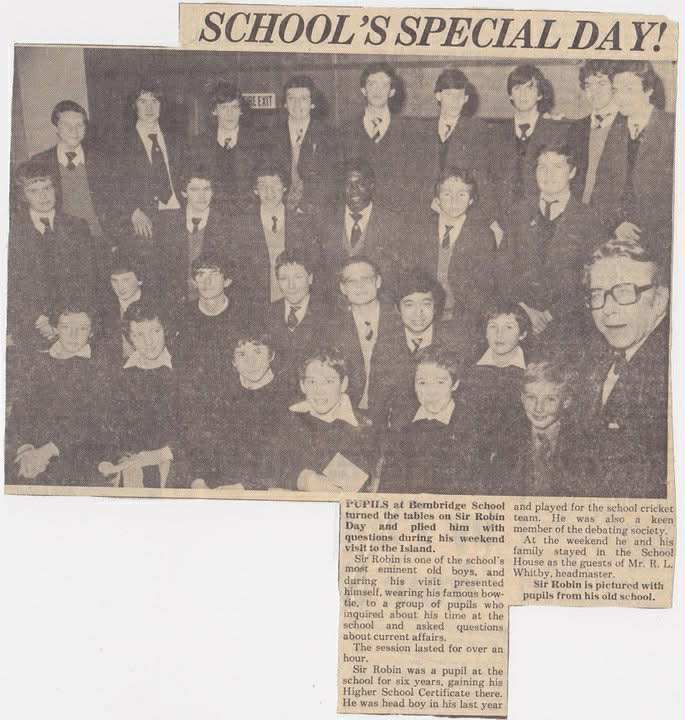
  • Time Capsule: Bembridge & Old Friends Pick Up Where They Left Off

    There’s something quietly magical about reconnecting with an old friend and realising that, despite the decades that have passed, the connection remains as strong as ever. That’s exactly what I experienced when I reunited with Bas, my old schoolmate from Bembridge School on the Isle of Wight, after more than forty years apart.

    Our conversation swept us back to our school days in the late 1970s and early 1980s, offering a vivid glimpse into British boarding school life that felt uncannily reminiscent of Hogwarts—long before Rowling imagined hers. The distinctive house ties, the train and boat journey to reach the school perched dramatically on a cliff edge—the parallels were striking.

    What stood out most was how formative those years were. Bas reflected on how the experience fostered independence: “You have to sort of think on your own.” I agreed—it taught me self-reliance and emotional control, helping me understand that I could shape my own life.

    The physical environment loomed large in our memories: immaculate grounds, creaking floorboards in Old House, and freezing dormitories where ice formed inside the windows. These shared hardships forged deep bonds, creating a sense of belonging that transcends time and geography.

    We laughed about the elaborate nickname culture—almost no one went by their real name. It was a kind of private language, reinforcing our place in a unique world.

    Music was another lifeline. From ABBA (Bas’s favourite) to The Jam, Queen, and Ultravox, these bands became the soundtrack to our adolescence. “It got me through,” Bas said—and I knew exactly what he meant.

    We reminisced about traditions like the Island Walk—a 30-mile overnight trek—and swapped ghost stories that once kept us awake. Though Bas now lives in Australia (with a “slight twang,” as I teased), our friendship felt untouched by time.

    This reunion reminded me that some friendships don’t fade—they simply wait to be rekindled. And when they are, it’s like coming home.

  • Father of Jazz: A Son’s Complicated Legacy

    The Legacy of Bill McGuffie: Musical Genius, Flawed Father

    In this episode, I sit down with Moray McGuffie to explore the extraordinary life of his father, Bill McGuffie—a man whose brilliance in the world of big band jazz and film composition was matched only by the complexity of his personal life.

    Born in Glasgow in 1927, Bill’s musical journey began with a jaw-dropping moment: stepping in at age twelve to perform at a major concert, sight-reading pieces he’d never seen before. That debut set the tone for a career defined by genius, discipline, and resilience. His mother’s strict training methods—ruler in hand—shaped his early development, and even after losing a finger to gangrene, he adapted with a distinctive style that became his signature.

    By his twenties, Bill was performing with legends like Joe Loss, Ted Heath, Bing Crosby, and Bob Hope. He composed for Doctor Who (with Peter Cushing) and Hammer Horrorfilms, and his home was frequented by celebrities including June Whitfield and members of Monty Python.

    Yet behind the acclaim lay a more turbulent reality. Moray speaks candidly about his father’s volatile behaviour, especially when drinking, and the emotional toll it took on their family. Their relationship fractured, leading to ten years of silence before Bill’s death in 1987—a silence Moray still regrets.

    What moved me most were the intimate details: music scribbled on Player cigarette packets, a child’s drawing turned into melody, and the innocent memory of chasing a golf ball, unaware of the rules. These moments reveal a man who was at once playful, distant, brilliant, and slighty broken.

    This conversation isn’t just about one father and son—it’s about legacy, reconciliation, and the enduring imprint of those we love, even when love is complicated.

  • Dad, My Memories: John’s Reflections on George Palmer

    The bonds between parents and children often reveal themselves in the most unexpected ways, sometimes only becoming clear years after they’ve passed on. During a recent conversation I recorded with my brother-in-law, John, on the Mediterranean coast of Spain, a quietly profound revelation emerged: sometimes we find ourselves living the dreams our parents once had, without even realising it.

    The story centred around a son who discovered that his life by the coast quite likely fulfilled his late father’s deepest wish—to live by the sea. “I just found out the day before yesterday from my sister that I’m probably living his dream,” he told me, visibly moved. This realisation wove an emotional thread through the episode, connecting generations in a way neither could have predicted. Even when his father lived inland, he found solace in the hum of the M25 motorway, which “sounds like the sea”—a poetic detail that speaks to the persistence of our deepest yearnings.

    Music came through as another powerful bond between father and son. From Johnny Cash and Elvis Presley spinning on the family record player, to him introducing his dad to bands like Madness in the ’80s, it became a shared language. His current love for alternative country music traces back to the country melodies his father played. That focus on lyrics and musical meaning shaped his own approach to music—a musical inheritance that outlives absence.

    Above all, what struck me was the portrait of a remarkably inventive man. From hand-sewn wetsuits to early tennis ball machines and eco-friendly burning blocks, he embraced life with boundless curiosity and ingenuity. His workshop turned out satin lampshades and imaginative contraptions, though never patented—they were gifts of the moment. Through these stories, the adventurous spirit of a man who loved golf, and motorcycles came vividly to life.

    When we considered how he might respond to modern technology—mobile phones, AI, and digital photography—John believed he’d embrace it all, grounded by his DIY spirit and authentic taste. That reflection ushered in a poignant truth: “When people are no longer there, everything they ever thought or believed just disappears.” And yet, these conversations hold something precious—they preserve more than memory. They capture the essence of someone who shaped not just one life, but maybe a geographical legacy.

  • Manchester to Namibia: A Life Less Ordinary

    Growing up in Whitefield, a small town near Manchester, Gary always had an adventurous spirit. Even at seven years old, he was leading his younger brother Karl and their friends on what they called “adventures“—day-long explorations fuelled only by jam sandwiches and bottles of tap water. While other children spent their pocket money on sweets and toys, Gary poured his into Collins wildlife books, unknowingly laying the foundation for a life shaped by a passion for nature.

    I first learned about Gary’s remarkable journey while speaking with his brother, who recounted how Gary transformed from a restless young man in early 1980s Britain into a respected safari guide and adventurer. Faced with the economic struggles of Thatcher’s Britain and feeling suffocated by what he called the “rat race,” Gary made a decision at 21 that would alter his course entirely. With just £150 in his pocket and a suitcase filled with practical gifts from his parents—a travel iron and a hairdryer among them—he left for France, armed only with a cassette course from which he taught himself French.

    What followed was an extraordinary 15-year stretch during which his family barely heard from him, save for the occasional letter. These letters, now treasured family artefacts, offer glimpses into a life lived on the fringes of conventional existence. He worked for the New York Times in Paris, sold ice cream in the south of France, bartended in Berlin, and taught English in Spain’s Basque country, picking up languages and experiences at every turn. By the time he set foot in Africa, he was fluent in French, Spanish, and several other languages—skills that would prove invaluable as his travels took increasingly audacious turns.

    The African chapter of Gary’s story began with a perilous solo hitchhike across the Sahara Desert, through Mali and Timbuktu, into Equatorial Guinea and Cameroon. One particularly chilling episode saw him navigating Angola during civil unrest, where he had to sign a disclaimer with the British Embassy acknowledging they wouldn’t repatriate his body if he were killed by UNITA rebels.

    Eventually, Gary reached his destination: Namibia, a vast, untamed wilderness that would become his home for the next 35 years. In Damaraland, a Mars-like expanse of red basalt rock, he found work tracking endangered rhinoswith the Save the Rhino Trust. Living in a tent for years, working with local Damara tribesmen as trackers, Gary developed an unparalleled intimacy with the land and its wildlife.

    To the Himba people, a nomadic tribe of the region, he became known as “N’garikatuki”—the man of the mountains. In one particularly moving moment, Karl shared how, during a visit after many years apart, a Himba tribesman recognised Gary’s name by reputation alone, despite never having met him. His stories had become woven into their oral tradition.

    His adventures didn’t end with land-based exploration. During what he calls his “midlife crisis,” Gary bought a 30-foot yacht with barely any sailing experience and embarked on a solo circumnavigation. That voyage saw him face hurricane-force winds, equipment failures, and a treacherous Pacific crossing reliant on makeshift repairs. At one point, the boat was buried in a sand pit on a Fiji beach for a year while he returned to Namibia to earn enough moneyto continue.

    Today, Gary runs his own safari company, guiding small groups to hidden corners of Namibia that few others know exist. His deep-rooted expertise and ability to converse in multiple languages make him especially popular with French, Spanish, and Italian tourists. His knowledge of Namibia’s wilderness—paired with decades of extraordinary experiences—even caught the attention of filmmakers. French director Eric Valli, known for the award-winning film Himalaya, drew inspiration from Gary’s stories for La Piste (The Trail).

    Gary’s life, chronicled in dozens of letters to his mother over the years, provides a rare window into the kind of adventure few would dare to pursue. From facing down lions alone in a tent to sailing single-handedly across oceans, his journey—from Manchester to Namibia—is a testament to how far curiosity and courage can take us.