Author: longtimeagopeople

  • Family bonds are complex threads that weave through our lives, often becoming most visible in their absence.

    In this deeply moving episode, I sit down with Andy to reflect on the life and legacy of his younger brother Simon, who passed away unexpectedly from a heart aneurysm nearly a decade ago. What unfolds is a conversation full of raw vulnerability and genuine reflection, revealing the profound impact one seemingly ordinary life can have on countless others.

    We begin with Andy’s earliest memory of Simon’s birth at home in Leeds, where he was just five years old, witnessing this new addition to the family. What follows is a warm recollection of growing up in 1960s Yorkshirefamily holidaysto Filey and Scarboroughfish and chipscaravan parks—those quintessential British childhood experiences that helped shape their bond. Though separated by a five-and-a-half-year age gap, their relationship deepened over time.

    A recurring theme is the educational legacy running through their family. Their father was head of science at a comprehensive school in Pudsey, their uncle Stan a headteacher, and Simon himself became a beloved PE teacher. As Andy put it, “there’s a lot of teaching backgrounds in the family.” Simon’s gift for connecting with young people wasn’t fully appreciated until after his passing, when the sheer number of lives he’d touched became heartbreakingly clear.

    The funeral was a moment of reckoning. The service was so packed that people were “up in the rafters.” Andy told me, “He obviously touched a lot of people very, very closely.” It was a powerful reminder that those who speak softly often leave the loudest legacy.

    Simon was the calming influence, the emotional compass of the family—someone with “no isms or ists,” who could see things from other people’s hilltops. Andy believes that some of the family rifts that have emerged since Simon’s death might have been resolved had he still been here to mediate.

    When I asked Andy what he’d say if he could have one more conversation with Simon, his answer was heartbreakingly simple: “I would ask him to help me.” Even now, he feels the absence of Simon’s wisdom, rating himself “two out of ten compared to Simon’s ten out of ten” when it comes to resolving conflict.

    This conversation left me reflecting on the quiet power of everyday kindness, and the enduring legacy of those who hold families together—not with noise, but with grace.
  • The Power of Enduring Friendship: Reconnecting After 40 Years

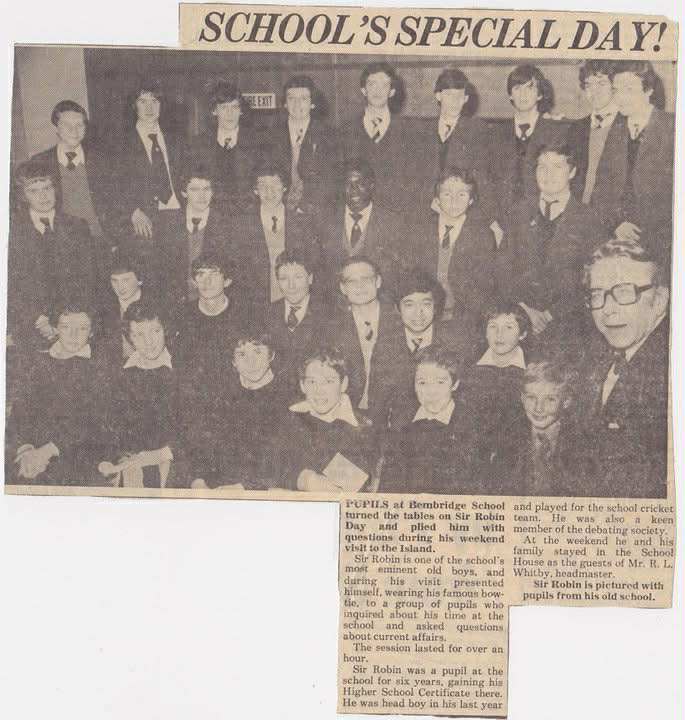
    There’s something quietly magical about reconnecting with an old friend and realising that, despite the decades that have passed, the connection remains as strong as ever. That’s exactly what I experienced when I reunited with Bas, my old schoolmate from Bembridge School on the Isle of Wight, after more than forty years apart.

    Our conversation swept us back to our school days in the late 1970s and early 1980s, offering a vivid glimpse into British boarding school life that felt uncannily reminiscent of Hogwarts—long before Rowling imagined hers. The distinctive house ties, the train and boat journey to reach the school perched dramatically on a cliff edge—the parallels were striking.

    What stood out most was how formative those years were. Bas reflected on how the experience fostered independence: “You have to sort of think on your own.” I agreed—it taught me self-reliance and emotional control, helping me understand that I could shape my own life.

    The physical environment loomed large in our memories: immaculate groundscreaking floorboards in Old House, and freezing dormitories where ice formed inside the windows. These shared hardships forged deep bonds, creating a sense of belonging that transcends time and geography.

    We laughed about the elaborate nickname culture—almost no one went by their real name. It was a kind of private language, reinforcing our place in a unique world.

    Music was another lifeline. From ABBA (Bas’s favourite) to The JamQueen, and Ultravox, these bands became the soundtrack to our adolescence. “It got me through,” Bas said—and I knew exactly what he meant.

    We reminisced about traditions like the Island Walk—a 30-mile overnight trek—and swapped ghost stories that once kept us awake. Though Bas now lives in Australia (with a “slight twang,” as I teased), our friendship felt untouched by time.

    This reunion reminded me that some friendships don’t fade—they simply wait to be rekindled. And when they are, it’s like coming home.

  • The Legacy of Bill McGuffie: Musical Genius, Flawed Father

    The Legacy of Bill McGuffie: Musical Genius, Flawed Father

    In this episode, I sit down with Moray McGuffie to explore the extraordinary life of his father, Bill McGuffie—a man whose brilliance in the world of big band jazz and film composition was matched only by the complexity of his personal life.

    Born in Glasgow in 1927, Bill’s musical journey began with a jaw-dropping moment: stepping in at age twelve to perform at a major concert, sight-reading pieces he’d never seen before. That debut set the tone for a career defined by geniusdiscipline, and resilience. His mother’s strict training methods—ruler in hand—shaped his early development, and even after losing a finger to gangrene, he adapted with a distinctive style that became his signature.

    By his twenties, Bill was performing with legends like Joe LossTed HeathBing Crosby, and Bob Hope. He composed for Doctor Who (with Peter Cushing) and Hammer Horrorfilms, and his home was frequented by celebrities including June Whitfield and members of Monty Python.

    Yet behind the acclaim lay a more turbulent reality. Moray speaks candidly about his father’s volatile behaviour, especially when drinking, and the emotional toll it took on their family. Their relationship fractured, leading to ten years of silence before Bill’s death in 1987—a silence Moray still regrets.

    What moved me most were the intimate details: music scribbled on Player cigarette packets, a child’s drawing turned into melody, and the innocent memory of chasing a golf ball, unaware of the rules. These moments reveal a man who was at once playfuldistantbrilliant, and slighty broken.

    This conversation isn’t just about one father and son—it’s about legacyreconciliation, and the enduring imprint of those we love, even when love is complicated.

  • Dreams Made Real in Spain

    The bonds between parents and children often reveal themselves in the most unexpected ways, sometimes only becoming clear years after they’ve passed on. During a recent conversation I recorded with my brother-in-law, John, on the Mediterranean coast of Spain, a quietly profound revelation emerged: sometimes we find ourselves living the dreams our parents once had, without even realising it.

    The story centred around a son who discovered that his life by the coast quite likely fulfilled his late father’s deepest wish—to live by the sea. “I just found out the day before yesterday from my sister that I’m probably living his dream,” he told me, visibly moved. This realisation wove an emotional thread through the episode, connecting generations in a way neither could have predicted. Even when his father lived inland, he found solace in the hum of the M25 motorway, which “sounds like the sea”—a poetic detail that speaks to the persistence of our deepest yearnings.

    Music came through as another powerful bond between father and son. From Johnny Cash and Elvis Presley spinning on the family record player, to him introducing his dad to bands like Madness in the ’80s, it became a shared language. His current love for alternative country music traces back to the country melodies his father played. That focus on lyrics and musical meaning shaped his own approach to music—a musical inheritance that outlives absence.

    Above all, what struck me was the portrait of a remarkably inventive man. From hand-sewn wetsuits to early tennis ball machines and eco-friendly burning blocks, he embraced life with boundless curiosity and ingenuity. His workshop turned out satin lampshades and imaginative contraptions, though never patented—they were gifts of the moment. Through these stories, the adventurous spirit of a man who loved golf, and motorcycles came vividly to life.

    When we considered how he might respond to modern technologymobile phonesAI, and digital photography—John believed he’d embrace it all, grounded by his DIY spirit and authentic taste. That reflection ushered in a poignant truth: “When people are no longer there, everything they ever thought or believed just disappears.” And yet, these conversations hold something precious—they preserve more than memory. They capture the essence of someone who shaped not just one life, but maybe a geographical legacy.

  • From Manchester to Namibia: The Extraordinary Life of Gary, the Safari Guide

    Growing up in Whitefield, a small town near Manchester, Gary always had an adventurous spirit. Even at seven years old, he was leading his younger brother Karl and their friends on what they called “adventures“—day-long explorations fuelled only by jam sandwiches and bottles of tap water. While other children spent their pocket money on sweets and toys, Gary poured his into Collins wildlife books, unknowingly laying the foundation for a life shaped by a passion for nature.

    I first learned about Gary’s remarkable journey while speaking with his brother, who recounted how Gary transformed from a restless young man in early 1980s Britain into a respected safari guide and adventurer. Faced with the economic struggles of Thatcher’s Britain and feeling suffocated by what he called the “rat race,” Gary made a decision at 21 that would alter his course entirely. With just £150 in his pocket and a suitcase filled with practical gifts from his parents—a travel iron and a hairdryer among them—he left for France, armed only with a cassette course from which he taught himself French.

    What followed was an extraordinary 15-year stretch during which his family barely heard from him, save for the occasional letter. These letters, now treasured family artefacts, offer glimpses into a life lived on the fringes of conventional existence. He worked for the New York Times in Paris, sold ice cream in the south of France, bartended in Berlin, and taught English in Spain’s Basque country, picking up languages and experiences at every turn. By the time he set foot in Africa, he was fluent in French, Spanish, and several other languages—skills that would prove invaluable as his travels took increasingly audacious turns.

    The African chapter of Gary’s story began with a perilous solo hitchhike across the Sahara Desert, through Mali and Timbuktu, into Equatorial Guinea and Cameroon. One particularly chilling episode saw him navigating Angola during civil unrest, where he had to sign a disclaimer with the British Embassy acknowledging they wouldn’t repatriate his body if he were killed by UNITA rebels.

    Eventually, Gary reached his destination: Namibia, a vast, untamed wilderness that would become his home for the next 35 years. In Damaraland, a Mars-like expanse of red basalt rock, he found work tracking endangered rhinoswith the Save the Rhino Trust. Living in a tent for years, working with local Damara tribesmen as trackers, Gary developed an unparalleled intimacy with the land and its wildlife.

    To the Himba people, a nomadic tribe of the region, he became known as “N’garikatuki”—the man of the mountains. In one particularly moving moment, Karl shared how, during a visit after many years apart, a Himba tribesman recognised Gary’s name by reputation alone, despite never having met him. His stories had become woven into their oral tradition.

    His adventures didn’t end with land-based exploration. During what he calls his “midlife crisis,” Gary bought a 30-foot yacht with barely any sailing experience and embarked on a solo circumnavigation. That voyage saw him face hurricane-force windsequipment failures, and a treacherous Pacific crossing reliant on makeshift repairs. At one point, the boat was buried in a sand pit on a Fiji beach for a year while he returned to Namibia to earn enough moneyto continue.

    Today, Gary runs his own safari company, guiding small groups to hidden corners of Namibia that few others know exist. His deep-rooted expertise and ability to converse in multiple languages make him especially popular with French, Spanish, and Italian tourists. His knowledge of Namibia’s wilderness—paired with decades of extraordinary experiences—even caught the attention of filmmakers. French director Eric Valli, known for the award-winning film Himalaya, drew inspiration from Gary’s stories for La Piste (The Trail).

    Gary’s life, chronicled in dozens of letters to his mother over the years, provides a rare window into the kind of adventure few would dare to pursue. From facing down lions alone in a tent to sailing single-handedly across oceans, his journey—from Manchester to Namibia—is a testament to how far curiosity and courage can take us.

  • Friendship Through the Decades: A Journey with Brenda and Chrissie

    In a world of fleeting connections,  Brenda and Chrissie friendship stands as a testament to genuine human bonds that transcend time. It all began in 1967 at Queen Charlotte’s Hospital in London, where they worked as midwives. Over five decades, their relationship has flourished, creating a tapestry of shared experiences, adventures, and memories that define true friendship.

    Their connection was built during their midwifery training, living in hospital accommodation at 348 Gold Oak Road. This period was characterised by a unique camaraderie, as healthcare professionals shared the intensity of midwifery work. They recall with fondness their cleaning lady, Mrs Sanchez, who somehow always knew which undergarments belonged to whom—a small, amusing detail that highlights the close-knit, family-like atmosphere of their early days together.

    Their adventures truly began with Chrissie’s grey Austin A40 van, which gave them mobility in an era when car ownership wasn’t common among young women. One memorable misadventure occurred when they ventured to Leicester Square to see Guess Who’s Coming to DinnerParking on newly established yellow lines (which they thought “didn’t mean anything after 6 o’clock”) resulted in them returning to find the van towed away to Elephant and Castle car pound. Told with laughter decades later, the story captures their youthful spirit and the different world of 1960s London.

    Their friendship evolved from local escapades to more ambitious travels. Their first major journey abroad in the mid-1970s took them to France’s Loire Valley, following hand-drawn directions on the back of an envelope. This trip marked the beginning of their European adventures, later expanding to organised tours of Italy, Egypt, and beyond. Sailing down the Nile, where looking across the fields felt like “being in the days of the Bible,” remains one of their most vivid travel memories.

    What makes their friendship truly special is how it weathered life’s changes. As Brenda progressed in her career, moving from midwife to director of nursing, their relationship adapted. They weren’t constantly in each other’s lives—Brenda reflects that “not living on top of each other” was key to their lasting friendship. Instead, they created space for each other during significant moments and holidays, establishing traditions like their annual Christmas gatherings.

    Their stories are peppered with historical touchpoints, placing their friendship within the changing Britain of the last six decades. From witnessing the Beatles era to delivering John Lennon and Yoko Ono’s baby, from navigating London before widespread motorways to adapting to modern travel, their friendship spans remarkable societal transformations. Yet the essence of their connection remained constant, providing stability amid change.

    Perhaps the most touching aspect of their relationship is their mutual support—during major life events and everyday moments alike. From saving Christmas gifts for each other during financially difficult times to finding creative solutions for holiday funding (like discovering £600 hidden in various spots around Chrissie’s parents’ house), they consistently showed up for one another with kindness and thoughtfulness.

    In today’s world of digital connections and transient relationshipsBrenda and Chrissie’s friendship offers valuable lessons in longevity, adaptation, and genuine human connection. Their story reminds me that the most meaningful relationships aren’t necessarily those with constant contact, but those that provide reliable support, shared joy, and deep understanding across decades of life’s unpredictable journey.

  • Life on the Isle of Wight During and After World War II

    The Isle of Wight holds a special place in British wartime history, as well as in my family’s memories. It served as a crucial defensive outpost against potential German invasion, and through the stories passed down to me, I’ve gained a glimpse into island life during that pivotal period and the years of recovery that followed.

    During World War II, the Isle of Wight was transformed into a military stronghold. The coastal beaches, particularly those facing France, were heavily fortified with enormous coils of barbed wire to prevent enemy landings. People could still walk along the shoreline, but the defensive measures were unmistakable. Perhaps most striking was the intentional damage inflicted on the island’s piers—they were deliberately broken halfway along to prevent enemy forces from landing at the far end and making their way inland. This strategy extended to all piers on the island, creating a formidable barrier against invasion.

    The military presence was significant, with RAF personnel stationed at key lookout points, like St. Boniface in Ventnor, and army units in Sandown. These installations served as vital early warning systems, monitoring potential threats from the Channel. The concern was very real—had the Germans captured the Isle of Wight after taking the Channel Islands, they would have gained a dangerous foothold for further invasion of mainland Britain.

    Daily life during wartime revolved around rationing and resourcefulnessFood shortages meant families had to be creative with limited ingredients. The weekly butter allowance was minuscule, about the size of what would now be considered a restaurant portion. Meals often featured corned beef, stretched further by serving it in Yorkshire pudding batter. People grew their own fruits and vegetables, composting everything possible—including tea leaves, which were reused multiple times rather than discarded after a single use.

    Housing arrangements reflected the communal spirit of wartime Britain. Many island residents took in soldiers and RAF personnel who were stationed nearby. These billeted servicemen came from diverse backgrounds across Britain, and for some, it was their first experience of modern amenities like indoor bathrooms. The bonds formed were lasting—after the war, many returned with their families to visit the places and people they had come to know during their service.

    The post-war economic recovery on the island was largely driven by tourism. Many families, including mine, transitioned into the hospitality industry, opening guest houses to accommodate the growing numbers of domestic tourists. In many cases, this happened almost accidentally—homeowners with spare rooms realised they could supplement their income by taking in visitors, gradually expanding their operations as demand grew.

    Running a guest house was labour-intensiveProprietors did everything from cooking and cleaning to entertaining their guests. Without modern applianceslaundry was particularly challenging—washing sheets, towels, and linensfor multiple rooms without the benefit of automatic washing machines or dryers. Homes were gradually converted to accommodate more visitors, often through the owners’ own renovation work rather than professional contractors.

    Tourism on the Isle of Wight peaked in the late 1960s, when domestic holidays were still the norm for most British families. The island had a special allure—the ferry crossing created a sense of adventure, making visitors feel as if they were embarking on a significant journey. Some tourists from northern England even asked if they needed passports to visit, reflecting how exotic the destination seemed to those who had never travelled far from home.

    The seasonal nature of tourism created distinct patternsNorthern factories would close for specific “wakes weeks”, sending workers from particular regions to the island during the same period each year. This fostered a community atmosphere, with guests returning annually and forming friendships with other regular visitors from their hometown. The guest houses often served as social hubs, with activities like billiards, music, and evening refreshments bringing people together.

    The personal stories of those who lived through this era provide invaluable insights into a rapidly changing Britain—from the hardships of wartime to the optimism of the post-war tourism boom and the cultural transformations of the 1950s and 1960s. Through these memories, I’ve gained a richer understanding of how ordinary people adapted to extraordinary circumstancesbuilding businesses and communities that shaped the Isle of Wight for decades to come.

  • Family Memories from Post-War Britain: The Isle of Wight, Seaside Hotels, and Life After London


    This oral history captures a vivid snapshot of British life from the 1940s through the 1960s, told through my conversations with my Aunt Chrissie about her parents, Thomas Augustine Miles and Helen Gladys Reygate known as Rae. Their story begins dramatically in London, where Thomas and Helen—unaware she was pregnant—welcomed a daughter born four weeks premature, weighing only four pounds. In those days before modern neonatal care, that was a dangerously low birth weight. When doctors advised them to leave polluted London for their daughter’s health, they made the significant decision to relocate to the Isle of Wight, where Helen’s sister lived.

    That move was a turning point that shaped their lives forever. They initially rented a small house before acquiring Rose Court Hotel in Sandown. The hotel soon became central to their world, with the whole family involved—Thomas waiting tables, Helen cooking, and their children helping in the dining room and bedrooms. As the hotel operated seasonally, most of its income was generated between May and September. Careful financial planning was essential—whatever they earned in the summer had to sustain them through the winter.

    Chrissie’s recollections offer fascinating insights into post-war British holiday culture. Their guests were mostly working-class families from industrial areas like the Potteries, visiting during annual factory closures. These weren’t the package holidays to Spain that would later dominate British tourism—back then, a trip to the Isle of Wight, involving a train journey and ferry crossing, felt exotic for many working families from the Midlands. The hotel built strong relationships with regular guests, even ensuring their preferred newspapers were waiting for them upon arrival.

    Life revolved around simple pleasures. The local Catholic church was both a religious and social hub, hosting whist drives, dances, and other gatherings. Cinema outings were hugely popular in an era before television, with films changing frequently enough that locals could visit multiple times a week. Managing resources carefully was a necessity—worn bedsheets were cut and resewn to extend their use, and nothing was discarded if it could be mended.

    Later in life, Thomas and Helen moved to Steyning, West Sussex, purchasing a derelict house for around £4,000-£5,000 in 1969. Thomas, who had worked in construction, put his carpentry skills to good use renovating the property. He also worked as a steward at a Foreign Office estate, managing the bar despite being teetotal himself. Helen, meanwhile, volunteered for the hospital car service, reflecting their continued commitment to community life even in retirement.

    Talking with Chrissie also brought up stark reminders of healthcare before the NHS. She recalled waiting in long charity clinic queues, where doctors saw patients on a charitable basis until time ran out. When she needed treatment, her parents had to trek to clinics, hoping she’d be seen before the doctor finished for the day. It’s a striking contrast to universal healthcare, which would later transform life for families like hers.

    Some of the most touching moments are the insights into Thomas and Helen’s relationship. While Helen was the strong organiser, Thomas was the quiet pillar of wisdom. One memory stands out—Chrissie once found them having a cuddle, her mother saying she “still laughed at his jokes.” Another speaks to Thomas’s gentle encouragement—when Chrissie doubted whether she should complete her nursing training, he reassured her, telling her that the qualification would serve her for life rather than forcing the decision upon her.

    These recollections paint a rich portrait of post-war British family life—from economic struggles and the rhythm of tourism to simple entertainments and the adaptability required to keep moving forward. They remind me how much Britain has changed, but also how enduring family support and resilience have always been.


  • “Longtime Ago People” – Preserving Family History Through Storytelling

    When my father was nearing the end of his life, we spent hours talking about his experiences—ordinary moments, extraordinary events, and everything in between. Those conversations revealed a profound truth: once our elders pass, their stories can vanish with them. This realisation became the spark that ignited my podcast journey, Longtime Ago People.

    The podcast’s unusual name stems from a charming family expression. When my children were young, they referred to their grandparents as “the longtime ago people”—a delightful childish phrase that perfectly captured the generational gap and the treasure trove of history that older family members represent. Little did I know then how poignant that innocent nickname would become, eventually inspiring a dedicated effort to preserve these generational connections.

    What truly motivated this project was a startling question that occurred to me one day: do my children even know my grandparents’ names? This simple yet profound thought highlighted the vulnerability of family history. Each generation further removed increases the likelihood that names, personalities, and stories will fade into obscurity. Our ancestors—people who shaped our families and indirectly influenced who we are today—risk becoming forgotten footnotes in our family narrative unless we actively work to preserve their memory.

    The inaugural episode features my Aunt Chrissie from the picturesque village of Steyning in West Sussex. The setting itself carries significance—we’re recording in a house where my grandparents once lived, adding another layer of connection to our conversation. We explore when they moved there, their life on the Isle of Wight before that, and the countless small moments that made them who they were. Through these conversations, I’m creating audio monuments to people my children never had the chance to meet.

    This podcast represents new territory for me—from microphone techniques to editing skills (apparently, I say “um” too frequently). But the learning curve feels worthwhile when balanced against what’s at stake: preserving the heartwarming, funny, and inspirational moments of special individuals who have touched our lives. These recordings become time capsules of memory, allowing future generations to connect with their roots through authentic voices and genuine stories.

    Longtime Ago People isn’t just about nostalgia; it’s about creating bridges between generations and ensuring that family wisdom and experiences aren’t lost to time. In our rapidly changing world, these connections to our past become increasingly precious. I invite listeners to join me on this journey—not just to hear my family’s stories, but perhaps to inspire them to capture their own family histories before those opportunities slip away. After all, we will all eventually become someone else’s “longtime ago people,” and our stories deserve to be remembered too.